Food and Nutrition
What to eat, what to avoid, and how to shop clean without it becoming a full time job.
JUMP TO
The One Thing Most People Get Wrong
How to Store Food Without Plastic
Food is where it starts for most people. It is also where the biggest gains are made.
What you eat three times a day, every day, is your most frequent and direct point of chemical exposure. Not just what is in the food itself, but how it was grown, what it was sprayed with, and what it was packaged in before it reached you.
The good news is that food is also where small, practical changes produce the most measurable results. The fertility clinic research we reference on our Start Here page showed that simply shifting toward cleaner produce, with no other lifestyle changes, doubled sperm counts in men and nearly doubled successful pregnancy rates in women.
This page tells you exactly how to do that.
The One Thing Most People Get Wrong
Most people assume that washing fruit and vegetables removes the problem. It removes some of it. But pesticides are not just sitting on the surface of your food. They are systemic. They are absorbed into the structure of the plant as it grows, which means they cannot be washed off. They are in the flesh of the fruit. You eat them directly.
This is not a reason to panic. It is a reason to know which foods carry the highest loads and make smarter choices about those specific ones.
That is exactly what the Dirty Dozen and Clean Fifteen lists are for.
The Dirty Dozen
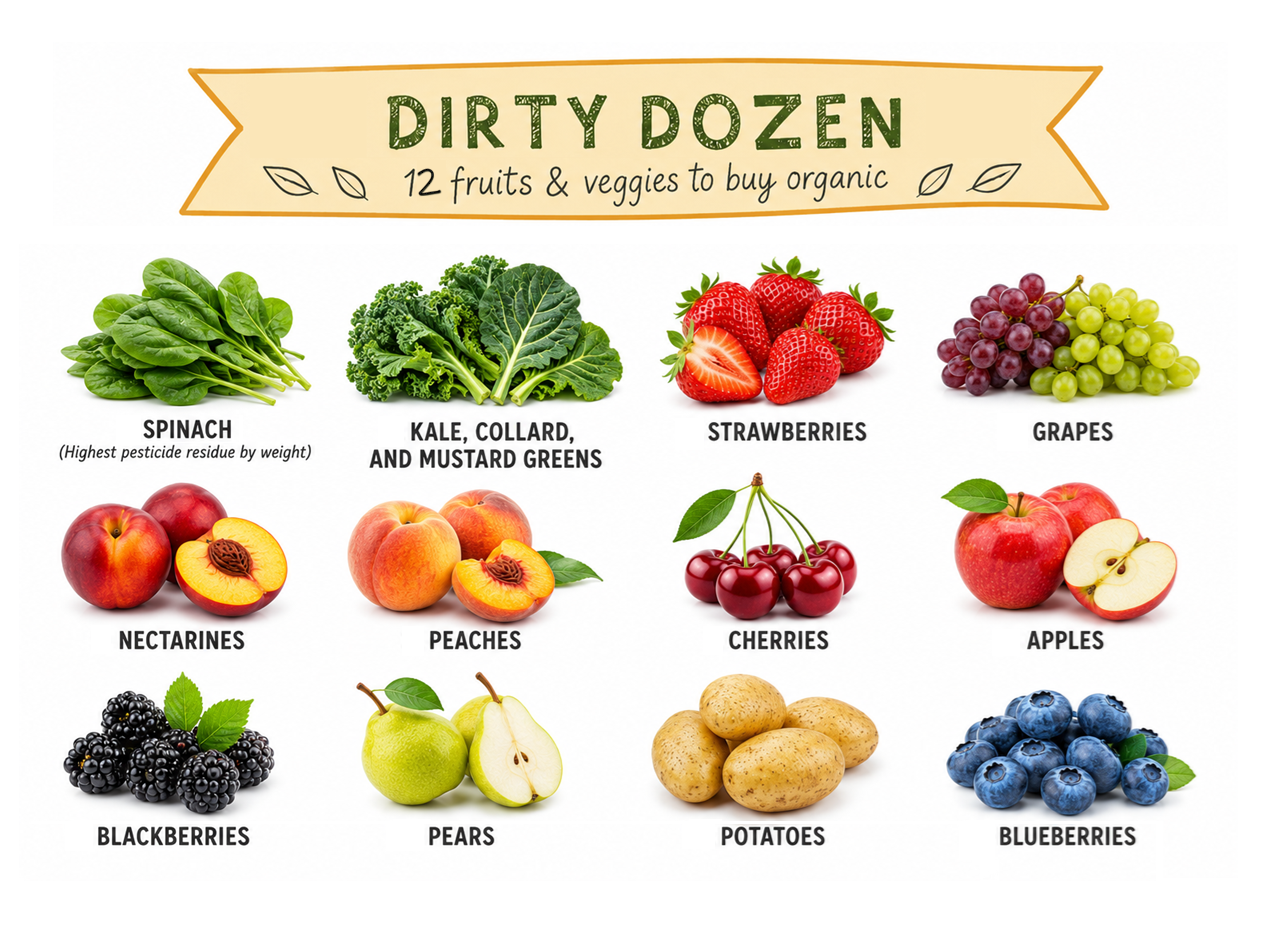
Every year the Environmental Working Group tests thousands of produce samples and publishes the twelve fruits and vegetables carrying the heaviest pesticide residues. These are the ones where buying organic makes the most meaningful difference to what actually ends up in your body.
For 2026, the Dirty Dozen are:
Buy these organic only:
Spinach / Kale and leafy greens / Strawberries / Grapes / Nectarines / Peaches / Cherries / Apples / Blackberries / Pears / Potatoes / Blueberries
Also worth buying organic: Bell peppers, hot peppers and green beans narrowly missed the 2026 Dirty Dozen but ranked at the very top for overall pesticide toxicity. Buy organic if you eat them regularly.
These crops absorb pesticides through their thin skins and into their flesh. Organic certification means they were grown without synthetic pesticides, which is the only real solution for produce in this category.
In the UK, look for the Soil Association logo or the word Organic on the label. In Sainsbury's, the SO Organic range covers most of these. In other supermarkets, look for their own organic lines or visit your local farmers market where you can ask growers directly about their practices.
The Clean Fifteen
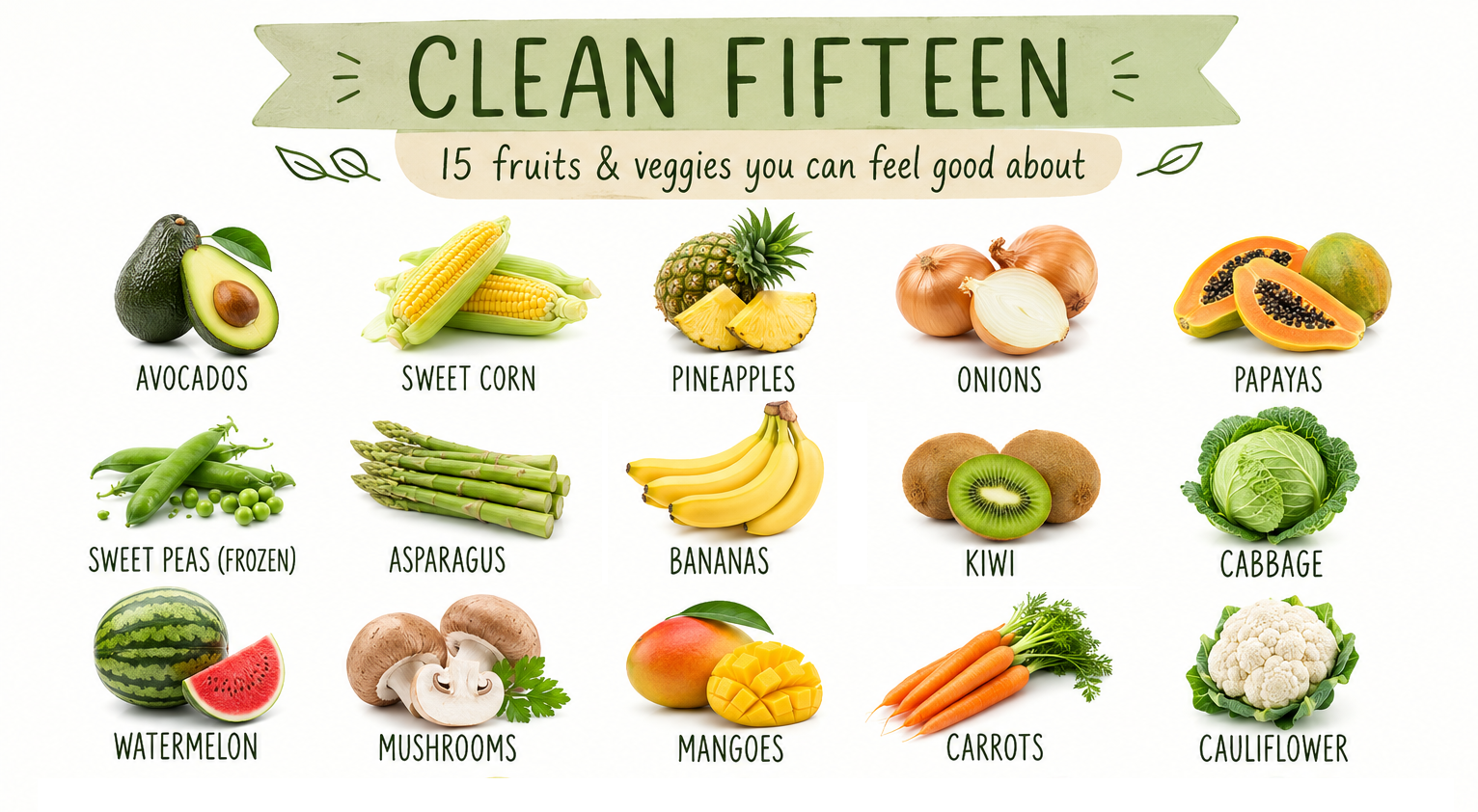
These are the fruits and vegetables where conventional is genuinely fine. Their thick outer skins or natural protective layers mean the edible portion carries very little pesticide residue even when grown conventionally. You do not need to spend extra on organic versions of these.
Conventional is fine for these:
Pineapple / Sweet corn / Avocados / Papaya / Onions / Frozen sweet peas / Asparagus / Cabbage / Cauliflower / Watermelon / Mangoes / Bananas / Carrots / Mushrooms / Kiwi
Knowing this list matters as much as knowing the Dirty Dozen. It means you can focus your organic budget where it actually counts and save money everywhere else.
What This Means for Fertility
The research here is some of the most striking we have come across. A fertility clinic studied 180 men struggling to conceive. Over six months they tracked one variable: what each man was eating. Specifically whether they were consuming high-pesticide produce or lower-pesticide alternatives.
The men eating the least pesticide-contaminated food had double the sperm count of those eating the most. No other lifestyle changes. Just cleaner produce.
A follow-up study with women at the same clinic found that those eating the cleanest diets had a 68% rate of successful live births. The group eating the most contaminated food had a 38% rate. Nearly double, from food choices alone.
And the developing fetus is estimated to be 100 to 1,000 times more sensitive to chemical exposure than an adult. The 270 days in the womb are the most critical window of all. What a mother eats during pregnancy matters more than at any other point in her life, and in her child's.
Clean Protein Sources
Protein is where people often get tripped up when trying to eat clean. Here is a straightforward guide to the best options and what to look for.
Legumes and Pulses
Lentils, chickpeas, black beans and butter beans are among the cleanest protein sources available. Buy dried in paper bags where possible, or jarred in glass. Avoid tinned where you can as standard tin linings often contain BPA or similar compounds. Bold Bean Co offer excellent glass-jarred options available in Sainsbury's, Tesco, Waitrose and Whole Foods.
Tofu and Tempeh
High in protein and versatile. Always choose certified organic and non-GMO as conventional soy is one of the most heavily sprayed crops in the world. In the UK, The Tofoo Co Naked Tofu is a strong option. Remove from packaging immediately, rinse under cold water, and store in a glass container submerged in fresh water in the fridge.
Eggs
Choose organic free range. The hens eat what they are fed, and what they are fed ends up in the egg. Look for eggs in plain unbleached cardboard cartons rather than glossy plastic packaging. Soil Association certified is the gold standard in the UK.
Greek Yogurt and Skyr
High in protein and beneficial for gut health. Choose organic where available. FAGE Total 0% is one of the best options on UK shelves for clean ingredients, though it does not carry organic certification. It is genuinely strained rather than thickened with additives, with 10.3g of protein per 100g and only 54 calories. Skyr is an equally strong alternative. Always check the ingredient list, which should say milk and live cultures and nothing else.
Organic Dairy and Plant Milks
If you consume dairy, choose organic. Organic standards prohibit routine antibiotics, synthetic hormones and chemical fertilisers. For plant milks, choose options with minimal ingredients and no added oils or stabilisers. Oat milk made from organic oats is a clean, straightforward choice.
How to Store Food Without Plastic
Buying clean food and then storing it in plastic containers or wrapping it in cling film undoes a significant part of the work. Plastic leaches into food particularly when food is warm, acidic, fatty or stored for long periods.
The swap is straightforward:
Use glass Mason jars or glass food storage containers with glass or stainless steel lids.
Use a stainless steel or glass bottle. A good water filter at home removes many pesticide and PFAS residues from tap water before you drink it.
Use cast iron, stainless steel or ceramic. Non-stick coatings contain PFAS which migrate into food during cooking, particularly at high temperatures.
Choose glass jarred alternatives where available. Bold Bean Co offer jarred pulses and legumes in Sainsbury's, Tesco, Waitrose and Whole Foods. The concern with standard tins is not just BPA. Most manufacturers have now replaced it with alternative compounds including BPS and BPF, which research suggests may be equally disruptive to hormones. Glass remains the only genuinely clean option. Find glass storage jars on Amazon.
Ready to make the switch?
Find glass food storage containers, beeswax wraps, stainless steel bottles, cast iron pans and water filter jugs on Amazon.
Shop plastic-free kitchen essentials on Amazon →Shopping Clean on a Real Budget
Eating clean does not have to mean spending more. It means spending differently. These principles make a meaningful difference without significantly increasing your weekly bill.
The budget strategy in three steps:
1. Spend organic budget only on the Dirty Dozen. Buy conventional for everything on the Clean Fifteen.
2. Buy dry pulses and lentils in bulk from paper sacks. Cheaper than tinned, cleaner than jarred, and they last months in a glass jar on your shelf.
3. Build meals around the Clean Fifteen and legumes as your base, with Dirty Dozen organics as supporting ingredients rather than the main event.
The shift does not have to happen overnight. Start with one swap this week. The Dirty Dozen list is a good place to begin. If you eat spinach or strawberries regularly, switch those to organic first. That single change puts you ahead of where most people will ever get to.
Organic Veg Box Delivery in the UK
One of the most practical ways to eat organic consistently without the mental load of checking labels in every supermarket aisle is to use an organic veg box delivery service. Two stand out as the strongest options in the UK and both meet our strict editorial standard.
Riverford Organic
Soil Association certified. B Corp certified. Employee owned.
Riverford has been farming organically since 1987 and delivers weekly veg boxes, fruit boxes and organic meat and dairy across the UK. All produce is Soil Association certified organic. The business is entirely employee owned which means there are no shareholder pressures to cut corners on standards. Riverford also publishes full transparency on their farming practices and suppliers. For anyone wanting to eat more organic produce without the supermarket premium, a Riverford weekly veg box is one of the most cost effective ways to do it.
Visit Riverford →Abel and Cole
Soil Association certified. B Corp certified.
Abel and Cole have been delivering organic food boxes since 1988 and cover most of the UK. Their produce is Soil Association certified organic and they work directly with a network of organic farms. Their weekly boxes cover vegetables, fruit, meat, fish, dairy and store cupboard staples, all organic. Like Riverford they are B Corp certified, meaning their social and environmental standards have been independently assessed and verified. A flexible subscription means you can pause or customise deliveries to suit your household.
Visit Abel and Cole →Green Earth Organics
Irish Organic Association certified. Solar powered farm. No airfreight.
A family-run organic farm in Galway, Ireland, founded by Jenny and Kenneth Keavey in 2006. One of only 60 to 70 field-scale organic vegetable growers left in Ireland. Everything they sell is certified organic. They deliver nationwide across Ireland and stock over 800 organic products including fresh produce, dairy, store cupboard staples and eco-friendly household goods. The farm generates its own electricity via solar panels, harvests rainwater and uses only compostable or recyclable packaging. For anyone in Ireland looking for a genuine farm-to-door organic service, Green Earth Organics is the best option we have found.
Visit Green Earth Organics →Nutrition for Perimenopause and Menopause
The nutritional priorities that matter throughout life become significantly more important during perimenopause and menopause. As estrogen declines, the body's ability to regulate blood sugar, maintain muscle mass, protect bone density and manage inflammation all change. Food is one of the most powerful tools available to support this transition.
Needs increase significantly during this transition. Without enough protein, muscle mass declines rapidly and metabolism slows. Current evidence suggests aiming for 1.2 to 1.6 grams per kilogram of body weight per day, roughly double the standard recommendation. Eggs, fish, legumes, Greek yogurt, meat and quality protein supplements can all contribute.
Aim for at least 25 grams per day. Most women get around 12. Fiber feeds the beneficial gut bacteria that help metabolise estrogen, slows blood sugar spikes that worsen with estrogen decline, reduces inflammation and supports heart health. Vegetables, fruit, legumes, oats, nuts, seeds and whole grains are all excellent sources.
Bone density loss accelerates sharply at menopause. Calcium and vitamin D are the two most important nutrients for slowing this. Research consistently finds that between 50 and 80% of menopausal women are vitamin D deficient. Aim for 1000mg of calcium per day from food sources including dairy, leafy greens, sardines with bones, almonds and fortified foods. Get vitamin D levels tested and supplement if needed, particularly from October to March in the UK.
Deficiency is common in postmenopausal women and contributes to poor sleep, low mood, muscle tension and bone loss. Best food sources include avocado, almonds, pumpkin seeds, dark chocolate, cashews and leafy greens. If supplementing, magnesium glycinate is the most bioavailable form and works best taken in the evening.
Estrogen is naturally anti-inflammatory. Its loss means inflammation increases. Omega 3 fatty acids, found in oily fish, walnuts, chia seeds and flaxseed, directly compensate for some of this lost protection. They support heart health, brain health and mood, all of which are affected by estrogen decline. Aim for at least two portions of oily fish per week.
Insulin resistance increases as estrogen declines, making blood sugar regulation harder. Reducing added sugar directly addresses this. The target is under 25 grams of added sugar per day. This does not mean avoiding fruit or complex carbohydrates, just the refined sugar added to processed foods and drinks.
The same principles that protect against chemical exposure throughout life, eating organic where it matters most, reducing plastic food contact, prioritising whole unprocessed foods, are also the principles that best support hormonal health during this transition. The two are not separate conversations.
Read the full Women's Health guide →Food is the foundation. It is where the body gets its building blocks, and where chemical exposure is most direct and most frequent. Getting this right does not require a complete overhaul of the way you eat.
It requires knowing which choices matter most. Now you do.
Start with one thing. Start today.
Sources: Environmental Working Group Dirty Dozen and Clean Fifteen Lists (2026) | Dr Shanna Swan, Count Down (2021) | Fertility and Sterility Journal | UK Pesticide Residues Committee Annual Report | Soil Association Organic Standards (2026). Some links on this page are Amazon affiliate links. Purify The World may earn a small commission on purchases made through these links at no extra cost to you.